

If you are a freelancer, contractor or part-time worker, dealing with racism at work can feel particularly complicated. Traditional workplace guidance often assumes a standard employment structure: a permanent role, an HR department, and a clear grievance process.
But many people work in much more flexible arrangements. Consultants, sessional workers, contractors and freelancers all play a crucial role, yet the systems designed to address workplace discrimination do not always reflect this reality.
If you experience racism in this kind of working arrangement, the options available to you may look slightly different.
Your legal rights
In the UK, freelancers and contract workers can still be protected from racial discrimination under the Equality Act 2010 if they are hired to personally perform the work (source: ACAS). This means that if your contract requires you to carry out the work yourself (rather than sending a substitute), the law may treat you as a “contract worker” for the purposes of discrimination protection.
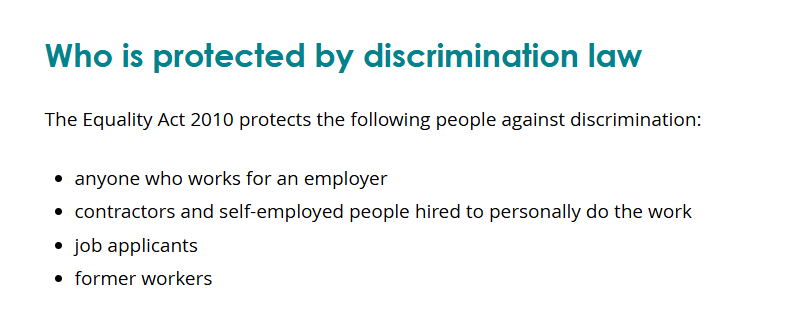
While freelancers may not have the same contract terms as employees, the law still makes it unlawful for someone to discriminate against you because of your race. This includes race, colour, nationality and ethnic or national origins.
The Equality Act covers several areas of working relationships, including:
- Hiring and selection
- Pay and benefits
- Contract terms
- Ending a contract
- Treatment while carrying out work
For example, it may be unlawful if a freelancer is treated less favourably because of their race, subjected to racist comments or behaviour, or if a contract is ended because they raised concerns about racism.
The law also protects against victimisation. This means it is unlawful for a client or organisation to treat you unfairly because you raised a complaint about discrimination, supported someone else’s complaint, or reported racism.
If you are contracted by a public authority such as a local council, NHS organisation or school, those bodies must also comply with the Public Sector Equality Duty, which requires them to actively work to eliminate discrimination and advance equality.
Check your contract and working relationship
The first step is to look carefully at the terms of your contract. Some contracts include clauses about workplace conduct, equality and safeguarding. Others may outline processes for raising concerns.
Even if there is no formal grievance procedure, these clauses can sometimes provide a basis for raising issues with the organisation.
It is also helpful to understand how your working relationship is classified legally. Some freelancers may fall under the legal category of “worker” rather than fully self-employed, which can affect the rights available to them.
Document incidents
Keeping a record of incidents can be important.
Make notes of:
- what happened
- who was involved
- when it occurred
- any witnesses
- how the incident affected you
If communication took place by email or messaging platforms, keep copies where possible.
Even if you decide not to pursue the issue formally, documentation can help you reflect on patterns and make decisions about future working relationships.
Consider raising concerns with the organisation
Some freelancers choose to raise concerns directly with the organisation they are working with. This might involve speaking to a commissioning manager, project lead or another senior contact.
In some situations you may be able to raise an informal complaint, asking for behaviour to change or for the situation to be addressed.
If that does not resolve the issue, some organisations may allow freelancers to raise a formal complaint or grievance, particularly where equality or safeguarding policies apply to contractors.
Before doing this, it can be helpful to think about your goals. Are you seeking an apology, a change in behaviour, or clearer boundaries around future interactions? Being clear about the outcome you want can make these conversations more constructive.
Consider mediation
In some situations, mediation may be an option. This involves an independent mediator helping both sides reach an agreement before moving to formal legal action.
Mediation can sometimes resolve issues more quickly and with less conflict, although it is not appropriate in every situation.
Seek external advice
Freelancers often assume that employment rights do not apply to them. In reality, discrimination law can still offer protection in certain circumstances.
You may wish to seek advice from organisations such as:
- ACAS (Advisory, Conciliation and Arbitration Service)
- Citizens Advice
- a solicitor or legal advice service
In some cases, freelancers can bring a discrimination claim to an Employment Tribunal, even if they are genuinely self-employed, depending on the nature of the working relationship.
Speaking to an adviser can help you understand what options may be available in your situation.
Weigh the risks and benefits
Freelance and contract work often relies on reputation and ongoing relationships. Raising concerns can sometimes carry professional risks.
This does not mean you should tolerate racism. But it does mean that many people feel they need to think carefully about timing, strategy and support before deciding how to respond.
Taking time to consider your options, speak to trusted advisors and gather information can help you make a decision that protects both your wellbeing and your livelihood.
Build supportive networks
One of the most effective forms of protection for freelancers is strong professional networks. Communities of peers can share experiences, recommend supportive organisations to work with and help identify environments where racism is taken seriously.
These networks also create spaces where people can speak openly about challenges that are often invisible in more formal professional settings.
You deserve safe and respectful working environments
Freelancers and contract workers are often told that difficult situations are simply “part of the job”. They are not.
Everyone deserves to work in environments where they are treated with respect and dignity, regardless of how their work is structured. Understanding your options, connecting with supportive networks and knowing where to seek advice can make navigating these situations a little less isolating.
For more detailed explanations and practical guidance on your rights and options, please refer to the practical guide developed by Sistren Legal Collective.
This article and all its content is for information only and does not constitute legal advice. All partners involved in developing this toolkit cannot provide employment law advice. If you need legal advice or support, please refer to the organisations and resources signposted.