
The Legal Toolkit
Part I: Mapping the Employment Law Landscape

The UK’s legal framework (known as ‘common law’) is based on a combination of laws passed by Parliament (‘legislation’) and decisions made by judges in courts and tribunals in legal cases (also known as ‘case law’). Depending on where in the UK you live, you are likely to experience laws differently. This is because the UK has three separate legal systems: one for England and Wales, one for Scotland and one for Northern Ireland. This toolkit has been developed by lawyers based in England and Wales and focuses on employment laws in those countries.
In this section, we will share a brief history of the evolution of employment laws and rights in England and Wales. We also provide an overview of key employee protections and rights that would help an individual navigate race discrimination and racism in the workplace. Woven throughout will be an exploration of some of the limits of the current employment rights, laws and protections in affording workplace equity. We will also touch on what lies ahead by way of legal reform.

A brief history of employment law in England and Wales
The roots influence the whole. The current employment law system is shaped by its past, and the workers’ rights movements that significantly changed the employment legal landscape over the last 250 years.
The ‘master–servant’ model dominated the legal relationship between employers and workers in the 18th and 19th centuries, with employers exercising significant control and discipline over workers. It was reinforced by written laws such as the Master and Servant Acts, which were deeply biased and favourable to employers.
To us today, it would be a dystopian reality. Workers had very few rights, and any lapse in fulfilling work requirements or challenge to working conditions by the workers led to strict punishments, including imprisonment for the workers. Speaking up against harsh work practices wasn’t made to be a viable option.
The early 20th century saw the gradual introduction of protective legislation for workers in response to growing social concern for workers’ welfare, and of workers organising for better pay and working conditions. The focus shifted from the employer’s interest in disciplining workers to protecting employee welfare, particularly in response to unfair treatment of those workers who suffered industrial accidents and workplace injuries without compensation. Some key legislation from this time includes:
- Workmen’s Compensation Acts (from 1897): Provided compensation for workplace injuries, regardless of fault. This marked a significant shift in attitudes on employer responsibility towards their workers, and on the role of the government in intervening in workplace matters.
- National Insurance Act 1911: Introduced social insurance cover for loss of income due to ill health or unemployment.
- Trade Boards Act 1909: Set minimum wages within certain trades that historically offered low wages to workers.
It was not until the 1970s that there was legal recognition of the idea that all employees are entitled to certain basic rights as part of their employment relationship (a ‘rights-based’ approach), including freedom from discrimination on the grounds of sex or race. And therefore, employers have obligations or duties to safeguard employee rights in the workplace. Some key legislation from this time includes:
- Industrial Relations Act 1971: Introduced laws on unfair industrial practices and established the National Industrial Relations Court to cover a range of labour relations and trade union matters.
- Equal Pay Act 1970: Mandated equal pay for men and women.
- Sex Discrimination Act 1975 and Race Relations Act 1976: Prohibited discrimination on grounds of sex and race.
From the 1990s onwards, employment law expanded to cover a wider range of rights, influenced significantly by European Union (EU) law. These changes reflected a broader societal shift towards equality and fairness at work. Some key developments were:
- The introduction of legal rights to parental leave, flexible working, and protection for part-time and fixed-term workers.
- Disability Discrimination Act 1995, which prohibited discrimination against disabled workers.
- EU-derived protections such as The Working Time Regulations 1998 (implementing the EU Working Time Directive), introduced limits on working hours and rights to paid holiday.
The legal framework today
Employment law today is framed by a number of different laws, supported by case law, and supplemented with practical guidance from regulatory bodies such as the Equality and Human Rights Commission (EHRC) and the Advisory, Conciliation and Arbitration Service (ACAS).
This section introduces the key legislation that shapes the employment law and rights landscape in the context of race discrimination. Later parts of this toolkit explore how these rights have worked in practice, and how the law has been interpreted and applied where individual rights have been infringed.
These key laws are:
- The Equality Act 2010
- Protection from Harassment Act 1997
- Health and Safety at Work Act 1974
- Personal injury law
- International Law: European Convention on Human Rights (ECHR) and the Human Rights Act 1998
- Employment Rights Act 1996 & the new Employment Rights Act 2025
Case law is law developed through decisions made by courts and tribunals. Judges establish, from evidence, the facts of the case, and interpret and apply legislation to specific cases. In England and Wales, case law often creates the legal principles that guide how similar cases are decided in the future.
A regulatory body, or a regulator, is an organisation or government body that makes, monitors and enforces rules and regulations, to ensure that the organisations regulated by it operate according to the law. For example, the Charity Commission regulates charities in England and Wales.
The Equality and Human Rights Commission helps enforce equality law, challenges discrimination, and provides guidance to employers, public bodies, and individuals about their rights and responsibilities.
Advisory, Conciliation and Arbitration Service provides free, impartial advice on employment rights and workplace disputes.
The Equality Act 2010 (Equality Act)
The Equality Act is the principal piece of equality legislation in the UK. The intention of the Equality Act was to harmonise and bring together the various existing anti-discrimination and equality laws to create a fairer and more equal society.
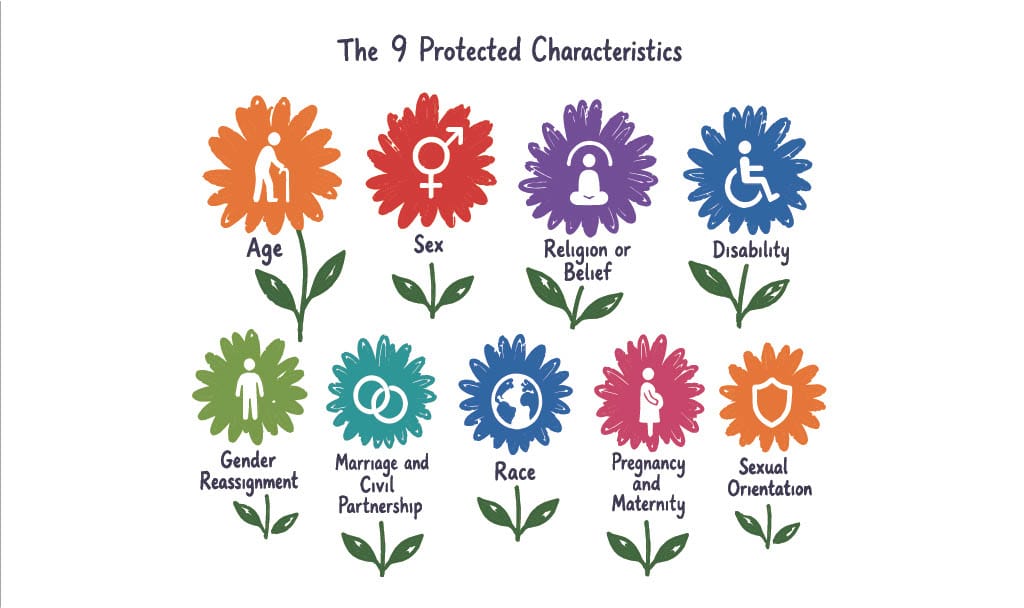
It outlaws discrimination based on specific characteristics, including (but not limited to) race, disability and age (called ‘protected characteristics’). In this toolkit, we are focusing only on race as a protected characteristic.
These include race, age, disability, gender reassignment, marriage and civil partnership, pregnancy and maternity, religion or belief, sex, and sexual orientation.
Race is defined to include colour, nationality, and ethnic or national origins.
The Equality Act applies to all aspects of working life, including recruitment, interviews, working conditions, promotions, transfers, dismissals, and training. The Equality Act specifies the types of discrimination that are prohibited under law, including direct discrimination (being treated less favourably because of a protected characteristic), indirect discrimination (a policy, practice, or procedure that disadvantages a group of people with a shared protected characteristic), harassment (unwanted conduct related to a protected characteristic that violates dignity or creates an intimidating environment), and victimisation (being treated unfairly for making or supporting a complaint of discrimination).
To enforce your legal rights in the workplace under the Equality Act, you’d usually bring a claim in the Employment Tribunal if you believe you have been subjected to discrimination (see later in the toolkit for information on bringing a claim, including ACAS Early Conciliation and time limits). Employment Tribunals can grant (or ‘award’) several remedies, including financial compensation to individuals (which the employers would typically be liable to pay), and give specific recommendations to employers to improve working conditions.
In addition to protecting rights at work, the Equality Act also provides protections in other areas of life, such as public services, education, housing, shops and service providers, and membership organisations and associations. In this toolkit, we specifically focus on how the Equality Act provides protections at work.
Protection from Harassment Act 1997
Beyond the Equality Act, the law provides additional protection against harassment including harassment on the grounds of race and harassment in the workplace. The Protection from Harassment Act 1997 law covers serious and repeated behaviour that causes alarm, distress, or fear.
To enforce your rights under this law, you’d need to bring a claim in the County Court or High Court, and you could ask the Court for:
- an injunction (a legal order stopping the behaviour), and/or
- compensation for the harm you’ve suffered, including anxiety or financial loss (such as loss of earnings).
Health and Safety at Work Act 1974 (HSWA)
Under this law, employers have a duty to ensure the health, safety, and welfare of their employees at work so far as is ‘reasonably practicable’. This includes an employee’s psychological safety. Employers must take reasonable steps to prevent and address risks to both physical and mental health, including those caused by race discrimination or harassment.
Health and Safety Executive (HSE): The HSE is a national regulator for workplace health and safety. While it is the central enforcing body for health and safety law (meaning, it is responsible for ensuring that risks to people’s health and safety from work activities are properly controlled), it is not the only body responsible for enforcement. A local authority may also be responsible for health and safety in the workplace, depending on the work activity and the type of workplace (for example, places of worship or nurseries).
The HSE and other enforcing bodies can investigate workplace accidents and bring a case for criminal wrongdoing under health and safety law in the courts of England and Wales. These bodies can also issue health and safety notices and formal warning letters to organisations, which can deter businesses from unsafe practices.
Personal Injury Law
An individual may be able to seek compensation if they are injured or suffer harm because of someone else’s negligence or wrongdoing.
In the workplace, employers have a duty of care to ensure the wellbeing of their staff. This includes providing a safe working environment that is free from discrimination and harassment. A personal injury claim may arise when race discrimination or harassment results in physical or psychological injury in the workplace. If an employer ignores or mishandles a discrimination matter, it can be interpreted as a failure or breach of their legal and contractual duties towards you and give rise to claims for breach of contract, including terms which are implied into an employment contract. Implied terms are unwritten contract terms that still have legal effect, for example, an employer must provide a safe working environment even if the employment contract doesn’t say so.
These claims can be brought in the County Court or High Court, and sometimes alongside other claims in the Employment Tribunal. Compensation can include payment for pain and suffering caused, and financial losses suffered. You can only bring a personal injury claim about the same issue in one forum (the place where a legal case is decided such as a court). For example, if you bring a personal injury claim in the Employment Tribunal, you cannot bring the same or similar claim again in the High Court.
International Law: European Convention on Human Rights (ECHR) and Human Rights Act 1998
The ECHR (incorporated into UK law by the Human Rights Act 1998) provides further protection against discrimination in the enjoyment of the rights and freedoms set out in the ECHR. Courts and tribunals must act compatibly with these rights (subject to any reasonable restrictions), including the right to private and family life (Article 8) and the right to a fair trial (Article 6).
Employment Rights Act (ERA) 1996 and the Employment Rights Act 2025
The ERA 1996 sets out a range of employment rights, including legal protection from unfair dismissal, the right to written terms of employment, the right not to be treated poorly or dismissed due to whistleblowing and rights relating to pay and working hours.
The Employment Rights Act 2025 was enacted in December 2025 and is expected to become fully effective by 2027 through a phased approach. It will significantly change the ERA 1996, and its current wording includes several expanded employee protections, such as:
- A new duty for employers to prevent harassment from third parties such as clients or customers.
- Employers needing to take ‘all reasonable steps’ to prevent sexual harassment (current law says ‘reasonable steps’).
- A change to the law around non-disclosure agreements (NDAs), making legally invalid any clauses that would prevent workers from disclosing work-related harassment or discrimination.
- Protection from unfair dismissal will become a right available after six months of employment (currently two years of service is required before being eligible to make an unfair dismissal claim).
A Non-Disclosure Agreement is a legal agreement that limits what someone can share about certain (often confidential) information. In some cases, where an employment contract has been terminated following an employer-employee dispute, an employer may ask the departing employee to sign an NDA restricting what can be said about the dispute. NDAs cannot lawfully prevent someone from bringing a legal claim, from reporting discrimination to the police or regulators, whistleblowing, or cooperating with the police or regulators. However, if you are considering making a protected disclosure (reporting on workplace wrongdoing which you are protected for, such as reporting an illegal workplace activity) after having signed an NDA, you are strongly recommended to seek legal advice as there are strict parameters so that any such disclosure remains protected.

“I challenged my employer and took an NDA with provisions I regret. I still don’t fully know if they were legal.”
Anonymised Spark x Sistren survey response
“I took an NDA I didn’t fully understand – just so I could leave quietly.”
Anonymised Spark x Sistren survey response
Where the Law Falls Short
The current UK employment legal frameworks do not fully capture the complexity of identity, the many ways in which racism can subtly or overtly come up in workplaces, or the evolving language used to describe identity. Drafting and interpretation of laws is a human exercise, and recognising how law has developed can help to understand and work within its limitations.
Before we do a deep dive into the Equality Act, we wanted to briefly touch on how the law does not always reflect the ways in which racial harm is understood or experienced by people subjected to it.
The language we use
The language we may use to describe the experience of racism is not reflected in the legal language used in race discrimination matters. Terms that we understand and use to capture particular types of racist experiences, including terms such as anti-Blackness, microaggressions, intersectionality or misogynoir, are not used in legislation and are typically not used in the language used to construct a claim of race discrimination.
In practice, this means you might need to:
- rethink strategies for bringing a race discrimination claim in the workplace,
- be mindful of the common pitfalls, and
- understand that a legal win may still not feel like a complete vindication of your lived experience.
‘Racism’ or ‘race discrimination’?
The law differentiates between ‘racial discrimination claims on grounds of race’ and a ‘racism’ claim. This difference in legal meaning is not as intuitive as you would expect.
The legal test: Under the Equality Act, ‘discrimination’ is defined as less favourable treatment because of a protected characteristic compared to another person in the workplace in a similar role who does not share the same protected characteristic.
Under the Equality Act 2010, there isn’t a single, standalone sentence that defines ‘race discrimination’ in isolation. Instead, the act:
- defines ‘race’ as a protected characteristic, and
- sets out different forms of prohibited conduct that amount to less favourable treatment because of a protected characteristic.
In most cases, race discrimination can encompass less favourable treatment due to caste. Sometimes someone’s ethnicity and religious belief are closely related. Where this happens, there can be less favourable treatment due to both race and religious belief.
Limited exceptions can be made, where there is an ‘occupational requirement’ for someone belonging to a particular protected characteristic and where this exception can be objectively justified. For example, casting a Black actor to play Nelson Mandela in a stage production would not be unlawful discrimination.
The way to show that race discrimination has occurred is an objective legal test: an individual must show that race was a significant factor in the differential treatment. The legal test does not require proof of racist intent.
This can feel like an artificial split between what someone did and why they did it. It may seem contradictory, especially in cases of overtly racist behaviour, where it’s hard to see the conduct as coming from anything other than an intention to harm someone because of their race.
Racist behaviour or ‘a racist’?
The focus of the legal test is on whether the individual was treated less favourably because of race, not whether the perpetrator is ‘a racist’.
Proving that someone is ‘a racist’ is harder within the framework of the law, even if a strong correlation may exist between a person who commits racial discrimination (as understood in law) and them being ‘a racist’.
Higher evidential hurdle for ‘racism’ claims
Framing discriminatory behaviour as ‘racism’ can create an unnecessarily higher legal hurdle. This is because the tribunals may (wrongly) expect evidence of explicit racist behaviour or intent, rather than focusing on the actual legal test: whether race was a significant factor in the treatment or relevant work decisions.
A possible reason for this distinction is because the law is attempting to address both conscious and unconscious bias, as well as the impact of apparently neutral policies that disadvantage certain racial groups. This can be seen to be giving less weight to a person’s motives or state of mind even if that is the source or origin of racial harm.
When you’re the person making a claim, the separation of someone’s intent or motive from the conduct you’ve experienced can feel unjust and an artificial separation in the legal framework. Despite this, individuals have to navigate what might feel like an imperfect legal framework to seek justice.
Dual discrimination and intersectionality
People cannot presently bring a combined claim for discrimination based on two protected characteristics (for example, race and sex, known as ‘dualdiscrimination), or bring an overlapping claim based on the combined effect of discrimination-based experienced and compounded by multiple protected characteristics. A claim must be brought for each protected characteristic separately.
This can make it difficult for the legal process to address the full complexity of an individual’s experience. The introduction of the right to bring a dual discrimination claim (a right which was originally included in the Equality Act but does not yet have legal effect) is one that is hotly debated and is currently under government consultation.
Intersectionality is a way of understanding that different aspects of identity (such as race, class, gender, sexuality, or disability) do not exist separately, and intersect and interact to shape an individual’s lived experiences and social positions, often resulting in overlapping forms of social, economic, or cultural disadvantage. Kimberlé Crenshaw, a critical race theory academic, coined the term ‘intersectionality’ in a paper in 1989 as a way to help explain the oppression of African-American women. There is an acknowledgement that current legal frameworks do not provide adequate protection against intersectional discrimination involving race.
Treatment of multiple discrimination claims
To mitigate against the risk of individuals bringing every possible form of discrimination claim (the ‘kitchen-sink’, claim-overloading approach), a legal adviser might suggest that individuals only bring the strongest and the most relevant claim. However, not bringing multiple claims because it will undermine the prospect of success can understandably feel unfair or inauthentic, and a dilution of a person’s lived experience.
Tribunal judgments (formal written decisions of a court in a case explaining the case outcome) sometimes criticise a ‘kitchen sink’ approach, where too many claims are included. In practice, this can distract from some of the stronger claims an individual might bring. Where an individual is found to be weak on a peripheral claim, this could affect the tribunal’s perception of credibility of the other stronger claims.
Subtle or systemic discrimination
The Spark x Sistren blog, highlights how racism in the workplace can often occur in ways that may not be obvious – in quieter, harder-to-name ways. Many forms of discrimination are subtle, unconscious, or systemic, and may not be accompanied by overtly racist language or behaviour. It is a constant presence, and not just something that ends when you leave work for the day.
“Earlier in my career, discrimination was usually informal – and almost certainly intersected with class/socioeconomic background. I didn’t have similar experiences to the majority population, and so often found myself excluded, or my work judged through a racialised lens (i.e. works hard, but doesn’t have leadership potential).”
Anonymised Spark x Sistren survey response
“In the training slides, the word Race had been removed from the list of biases entirely. I was stunned. When I raised the absence of race, I was shut down and not allowed to speak further.”
Anonymised Spark x Sistren survey response
“Often there is an unspoken assumption that being an East Asian woman, I am deemed as more compliant and assigned more administrative tasks.”
Anonymised Spark x Sistren survey response
Understanding the Equality Act in the Context of Race Discrimination at Work
In this section, we take a deeper look at the protection framework within the Equality Act, applicable to cases of race discrimination at work. To do so, we’ll cover the following questions:
- Who is protected?
- Who can discriminate?
- When can discrimination happen?
- What types of race discrimination claims are covered under the Equality Act?
Who is protected?
In England and Wales there are three main categories of working relationships:
- employees
- workers
- self-employed individuals
Understanding the distinction between these categories is important to determine what legal rights and protections a person has at work. This is a complex area of law, but the following table provides a high-level, indicative overview of the Equality Act protections available to different people in the workplace. If you are unclear about the category you may fall under, we would recommend seeking legal advice.
Equality Act Workplace Protections Overview
Working Relationship
Definition
Equality Act protected
Employees
Employees are people who hold a contract of employment. They are entitled to the full range of Equality Act protections from recruitment to the end of their employment.
For example, from day one of employment, an employee cannot be dismissed on the basis of race. This means that an employer cannot lawfully dismiss someone because of their race, even if the person has only just started the job (so, without needing any minimum period of service). An employee can also be protected from discrimination after their employment has come to an end (see final catagory).
Yes
Workers
This is a broader category that includes employees and also those who may not have formal employment contracts but offer work or services personally. Workers who are not employees will typically have greater flexibility in when and how they work. For example, in the 2021 landmark legal case brought by Uber drivers against Uber, the UK Supreme Court ruled that Uber drivers would be classed as workers (not as self-employed).
Workers are protected under the Equality Act, however they do not have the protection of the full suite of employment rights, including protection from unfair dismissal or the right to statutory maternity leave and pay.
Yes
Self-employed individuals
Self-employed people are those who run their own business or business activities. They have some legal protections, including Equality Act protection when providing services to clients or customers. However, they do not benefit from employment right protections.
Yes
Job applicants
Job applicants are protected from discrimination based on their protected characteristics under the Equality Act during the recruitment process, including in job descriptions, candidate shortlisting, interviews or job offers.
Yes
Agency workers
People working via an employment agency are protected under the Equality Act. Both the agency and the organisation where the individual works have duties to ensure that the worker is not discriminated against.
Yes
Vocational training and work experience
Individuals undertaking vocational training, apprenticeships, or work experience placements are protected from discrimination under the Equality Act in the arrangements for, and the terms of, their training or placement.
Yes
Trade Union members
Both current and prospective members are entitled to equal treatment for membership, benefits and union activities under the Equality Act.
Yes
Interns
The term ‘intern’ is not legally defined, so their rights depend on what they actually do. For example, if an intern is paid and required to work set hours, they may be classed as a worker or an employee and would then have the associated protections. If an intern is simply observing and not generating any work outputs, they may be treated as a volunteer and not have employment rights.
It depends
Volunteers
Volunteers are individuals who give their time and effort to an organisation, usually a charity or non-profit, without receiving pay or contractual benefits. Their legal status is different from that of employees, workers, and the self-employed.
Volunteers are generally not protected under the Equality Act in the same way as employees or workers. However, if a volunteer arrangement is similar to a formal employment relationship (for example, regular payments, fixed working schedule, etc.), they may have employment rights and the law may even regard them as employees.
Note that some organisations may have their own internal staff policies to prevent discrimination against volunteers.
Exceptions apply
Former employees and workers
Also protected if the discrimination or harassment is closely connected to their previous employment. For example, if a former employer has provided a discriminatory reference, the individual may still be protected.
Yes
Who can discriminate?
Both people and organisations can discriminate. Under the Equality Act, claims can be brought against both the individual and the employer.
An employer is primarily liable for discrimination, harassment or victimisation committed by its employees or agents in the ‘course of employment’ even if the employer did not know about or approve of the discriminatory conduct (in law, this is known as ‘vicarious liability’). The employer may also be directly liable for its own policies, practices, acts or decisions that are discriminatory. One of the ways in which employers may defend themselves against a discrimination claim is if they can show that they took ‘all reasonable steps’ to prevent the discrimination. For example, an employer may argue that providing mandatory Diversity, Equity and Inclusion (DEI) staff training and having a DEI policy are some examples of reasonable steps they’ve taken to prevent race discrimination in the workplace.
Any individual in the workplace may also have ‘personal liability’ (meaning, be legally responsible for) discrimination. This could include, for example, managers, colleagues, colleagues you manage, board members, trustees and even third parties such as customers or clients.
Crucially, a person can discriminate against someone who shares the same protected characteristic. Under the Equality Act, belonging to a racialised identity or having another protected characteristic does not excuse race discrimination against another.
“I was bullied by a manager from the Caribbean. He made jokes about my body and would occasionally touch it and felt he was allowed to do so as he was also Black (I’m Black African) and he was also gay so he felt it could not be considered assault.”
Anonymised Spark x Sistren survey response
When can discrimination occur?
Discrimination can occur at any stage of the employment relationship, such as during recruitment, training, performance appraisals and redundancies. An employer’s legal responsibility extends to preventing discrimination at work, and even conduct outside the workplace is there is a close or sufficient connection to work for example, during work-related social events, or business trips.

“From day one, I had a target on my back.”
Anonymised Spark x Sistren survey response
What types of race discrimination claims are covered under the Equality Act?
Here is a brief overview of the different types of race discrimination claims under the Equality Act.
Direct discrimination occurs when an individual is treated less favourably than another person because of their race, colour, nationality, or ethnic or national origin. Unless there is a statutory (legal) exception, direct discrimination cannot be excused or defended.
Under direct discrimination the treatment complained of must be compared with that of an actual or a hypothetical person – the comparator – who does not share the same protected characteristic (race). An individual is required to show that they were treated less favourably than their colleague (or a hypothetical colleague) of another race would have been treated in materially the same circumstances.
There are three types of direct discrimination. These are when it happens to a person who:
- has a protected characteristic and is treated less favourably. This is sometimes called ‘ordinary’ direct discrimination. For example, someone is overlooked for promotion because they are of Vietnamese heritage.
- is treated unfairly because either someone they know or someone they are associated with has a protected characteristic. This is called ‘discrimination by association’. For example, an employee is overlooked for promotion because their spouse is a Black person.
- is treated unfairly because it is believed that they have a certain protected characteristic, whether or not it is true. This is called ‘discrimination by perception’. For example, incorrectly assuming someone is Asian when they have no Asian heritage and making inappropriate remarks to them in the workplace on that basis
Indirect discrimination happens when a ‘policy, procedure or practice’ (PCP) that might appear to be neutral has the effect, in practice, of disadvantaging a particular group with a shared protected characteristic, and which cannot be ‘objectively justified’. ‘Objectively justified’ means the employer’s actions are based on fair reasons and are balanced so that they do not disadvantage particular groups more than is absolutely necessary to achieve a legitimate aim.
Indirect discrimination is intertwined with equality of outcomes. For example, a company policy banning dreadlocks, while on the face of it might be a neutral policy as it applies to all employees equally, is likely to disproportionately affect Black people and therefore could amount to indirect discrimination against Black workers.
Indirect discrimination can also occur when a policy would put a person at a disadvantage if it were applied. For example, if you were deterred from applying for a job or taking up an offer of service, because a policy which would be applied would result in your disadvantage (such as a hair policy).
The legal phrase PCP includes the following:
- Decisions around workplace facilities – for example, toilets and common areas
- Policies on ways of working – for example, flexible working or working from home
- Policies on workwear and appearance – such as style of clothing or hairstyle
- Selection criteria used in recruitment ▶ The way employees are selected for redundancy
- Working hours
Recent developments under the Equality Act mean that a person can bring a complaint/claim even if they do not personally have the protected characteristic (such as race), as long as they suffer ‘substantively the same disadvantage’ as those who do – called ‘same disadvantage’ indirect discrimination.
For example, a business owner does not wish to work with South Asians and so avoids recruiting individuals from the Wembley postcode (on the basis that many South Asians live in Wembley). While this recruitment practice discriminates against South Asians, it could also indirectly discriminate against non-South Asians living in Wembley; they would likely suffer from the same disadvantage because of the discriminatory recruitment practice.
Harassment is when unwanted behaviour violates someone’s dignity or creates an environment that is ‘intimidating, hostile, degrading, humiliating or offensive’. It can still be harassment even if the person did not mean to cause harm, or if they intended to, but their attempts had no effect. When deciding if behaviour is harassment, the law looks at what happened, the wider circumstances, and how the person experiencing it was affected (a ‘reasonable’ person’s view). A ‘reasonable person’ means an ordinary, fair-minded person looking at the situation in a balanced way.
Microagressions, when repeatedly inflicted, can amount to harassment under the Equality Act.Microaggressions are subtle, often unintentional, comments or behaviours that convey negative or stereotypical messages about a person’s race or ethnicity.
While not a standalone legal category, the Employment Tribunal has increasingly recognised the impact of repeat microaggressions on an individual. The law will look at the impact on the individual in their workplace rather than the intention of the aggressor. Examples include:
- repeatedly mispronouncing someone’s name or refusing to learn it;
- asking ‘Where are you really from?’;
- making assumptions about someone’s abilities or interests based on their race; or
- jokes or ‘banter’ that rely on racial stereotypes.
Since October 2024, employers have had a duty to take ‘all reasonable steps’ to prevent sexual harassment in the workplace. While this duty does not, on its own, create a standalone legal claim for third-party harassment across all protected characteristics, it has arguably strengthened expectations that employers take proactive steps to prevent sexual harassment and carry out proper risk assessments. This is relevant for this toolkit, especially in cases involving misogynoir.
The Employment Rights Act 2025 creates a more explicit tool with which to hold employers responsible for harassment of employees by third parties (such as customers or service users) during work, and this will apply to harassment related to all protected characteristics, not just sexual harassment. Expected to come into force in October 2026, the law means an employer may be liable if it has not taken all reasonable steps to prevent the harassment, shifting the focus to whether the employer properly assessed risks and put preventative measures in place, particularly in public-facing or higher-risk workplaces.
Depending on the workplace, ‘all reasonable steps’ to prevent third-party harassment might include clear policies and signage, training (including for managers), risk assessments for public-facing roles, contractual controls with suppliers, banning or excluding abusive customers, altering staffing or security arrangements, prompt investigations, and effective follow-up.
Victimisation occurs when an individual is subjected to a detriment or disadvantage because they have made or supported a complaint of race discrimination or done anything else in connection with the Equality Act. Making a complaint of this kind is known as a protected act.
For example, a racialised employee raises concerns about having been subjected to racism in the workplace because offensive and hostile comments were made about their nationality. Subsequently, they are bullied, excluded from meetings, and undermined by leadership. This treatment is an example of victimisation, as it is a direct response to the employee’s protected act of raising a complaint about discrimination.
The PSED is a positive legal duty on listed public authorities that requires them to have ‘due regard’ to the need to eliminate discrimination, advance equality of opportunity, and foster good relations between people who share and do not share a particular protected characteristic. For example, a public sector employer fails to take any action after repeated reports of racial harassment, demonstrating a lack of due regard to the PSED. This may form the basis for a judicial review or be relevant in a discrimination claim against a public body or a body that receives public funding, such as a university or the NHS.
Judicial review is a legal process where the courts examine whether a public body has acted lawfully, fairly, and within its powers when making a decision. Possible outcomes of a judicial review include the court overturning a public body’s decision, ordering a public body to reconsider or take action, stopping unlawful action, or confirming that the decision was lawful.
A dismissal is discriminatory if an employee is dismissed for reason related to a protected characteristic. Dismissal happens when the employer terminates the employment relationship, or where the employee terminates the employment relationship citing ‘constructive dismissal’ (due to a breach of contract or being forced to exit an organisation due to a breakdown in trust and confidence) as the reason.
For example, an employee who has repeatedly raised concerns about race discrimination is dismissed on ‘performance’ grounds when the real reason is their act of raising a race discrimination complaint (a ‘protected act’). Not only could the act of dismissing the employee amount to victimisation, it could also be categorised as an unlawful discriminatory dismissal.
Ordinary unfair dismissal occurs when an employee is dismissed by their employer without a lawful reason (performance, conduct, redundancy, illegality or some other substantive reason) or if the employer fails to follow a fair process.
Before bringing an ordinary unfair dismissal claim, an employee must be eligible to bring such a claim. Currently, an employee must have at least two years’ continuous service before they can bring an ordinary unfair dismissal claim. Under the new Employment Rights Act 2025, the government has proposed that a minimum of six months’ continuous service will be required.
However, you are protected from day one of your employment from being dismissed unfairly for discrimination based on grounds of race or any other protected characteristic.
Black women, misogynoir and employment rights
This section of the toolkit has been authored by the Trade Union Congress, with special thanks to Michelle Codrington-Rogers, Policy Lead – Anti Racism at the Trades Union Congress (‘TUC’).
Black women often face double-discrimination at the intersection of racism and sexism/misogyny. This has been defined by Moya Bailey as ‘misogynoir’.
Black women reported to the TUC in 2024 that 73% of respondents had been bullied or harassed in the workplace. This figure had increased since the conduction of previous research, showing that the situation had only worsened in the workplace for Black women. Whether it is microaggressions (i.e. comments about appearance, hair or traditional dress) or intended ‘exclusion’ from social or workspaces, there is a long-term impact on Black women as they navigate workspaces.
In 2017, as reported to the TUC, it was found that over half (57%) of Black women who had experienced bullying or harassment at work reported that discrimination in work had led to a negative impact on their mental health.19 Additionally, in the same research, Black women also reported that the denial of training or promotion also impacted their mental health.
These are just some of the ways discrimination in the workplace shows up for Black women. From pressures of ‘digital presenteeism’ when working remotely, to experiences of verbal or visual racism, such as remarks or comments made in their presence, Black women navigate a nuanced level of discrimination in the workplace. It is due to this layering of discrimination that Black women often
don’t report incidents of misogynoir due to a fear of being disbelieved, or subjected to no formal action by the employer.
Unfortunately, this also applies to Black women when they experience sexual harassment at work. From our 2024 study, 65% of Black women respondents reported experiencing sexual harassment at work. This often takes the form of racialised sexual harassment driven by stereotypes that view Black women as ‘hyper-sexual’ or ‘sexually available’.
“I’ve experienced endless racism and discrimination in all workplaces besides my current ones. This ranges from overt racism – slurs, comments on my hair, overt exploitation – to more subtle forms of discrimination.”
Anonymised Spark x Sistren survey response
With new guidance under the Worker Protection (Amendment of Equality Act 2010) Act 2023, there is a preventative duty placed on employers to take ‘reasonable’ steps to protect employees from sexual harassment in any space considered as a ‘workplace’ and it also applies to third-party providers. This includes training, meetings, work trips and social gatherings.
Things you can do if you experience misogynoir in the workplace:
- Keep a diary of all incidents that make you feel ‘uncomfortable’ – write down the date, who was involved, who witnessed it, and if you raised it or discussed it with anyone else.
- Consider arranging a meeting with your line manager; if you’re a member of the union, you can ask for the trade union rep to come with you, or also a ‘friend’. They can be your note keeper, your emotional support, or in the case of the union rep, your advocate.
- Join a trade union – there is a union for every job.
Mental health and race discrimination
The Spark × Sistren survey made it clear that workplace racism takes a serious toll on respondents’ mental health. Many respondents described experiencing anxiety, depression, burnout, and long-term mental health struggles because of their workplace experiences: 44.1% said racism significantly affected their mental health and wellbeing, and 30.5% reported a moderate impact.
If your mental health is affected by workplace discrimination, consider speaking to someone at work whom you trust, such as your line manager, or where available in the workplace, a Mental Health First Aider. Where an employer is aware of poor mental health or a potential disability, they are under a legal duty to consider and make reasonable adjustments. However, we know that in practice this doesn’t always work well.
Experiencing race discrimination at work is distressing and isolating. There are several steps and sources of support available, which are signposted to near the end of this toolkit. Speaking to trusted colleagues, friends, or family members can provide emotional support and practical advice. You are not alone, and you don’t have to go through it alone.
“I ended up needing counselling after a racist incident. The 12 sessions I was given weren’t enough – I still have to see the person who harmed me at work.”
Anonymised Spark x Sistren survey response